
Answer to the question about safe procedures during launch: the explosion of a heavy Blue Origin rocket reveals safety details
New Glenn Rocket Explosion: Lessons and New Safety Calculations
What happened
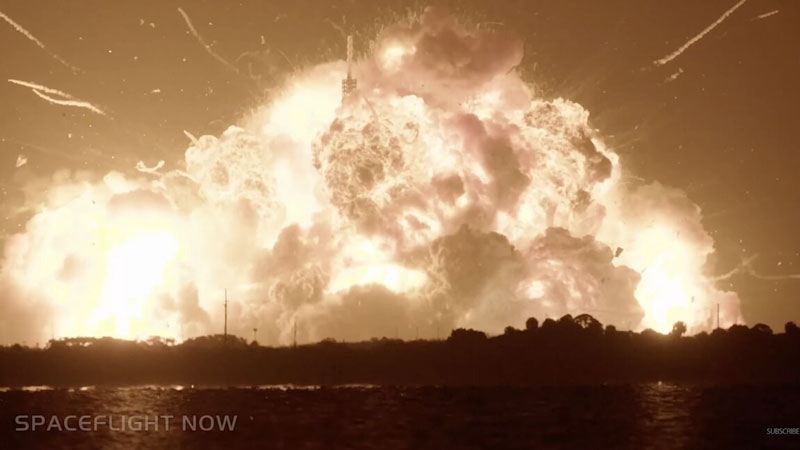
On May 28, 2026 – the explosion of the heavy New Glenn rocket at the Blue Origin launch pad destroyed part of the infrastructure, with repairs expected to take several months.
1. What occurred
During a static fire test, the New Glenn rocket broke apart at the base. The explosion involved methane fuel and caused damage to the launch pad. Debris scattered up to 800 m from the launch site, and the shockwave shattered windows at the U.S. Space Forces museum located 1.5 km away.
2. Why it matters
- The blast served as a “natural experiment,” providing precise data on the force and consequences of a methane‑fuel rocket explosion.
- These findings allow refinement of destruction models and assessment of real risk zones around launch sites.
3. Current safety rules
Fuel type | Explosiveness rating
Hydrogen, kerosene | 100 % TNT equivalent (TE)
Methane | 25 % TE (requested reduction)
- For New Glenn the safe perimeter is about 1 km from the pad.
- SpaceX and other companies lobby for a shift to 25 % TE for methane to reduce the safety zone size.
4. Why the “100 % rule” proved justified
The blast showed that at 100 % TE the calculated zone truly protects against damage and potential casualties, confirming the need to maintain stricter standards for methane rockets.
5. Future of space launches
- Cape Canaveral (Florida) plans up to 500 launches per year involving 4–5 companies in ten years.
- Space is limited, so reducing the safety perimeter would enable denser rocket placement.
- For Starship, a larger vehicle than New Glenn, the safety zone is 1.8 km, also calculated using the “100 % rule.”
6. Next steps
Analyzing debris dispersion and shockwave will allow:
1. Refinement of physical models for methane accidents.
2. Recommendation to regulators to review perimeter rules around launch sites.
Thus, the New Glenn disaster has become a valuable data source that can help make future launches safer and more efficient.
 Asted Cloud
Comments (0)
Share your thoughts — please be polite and stay on topic.
Log in to comment