
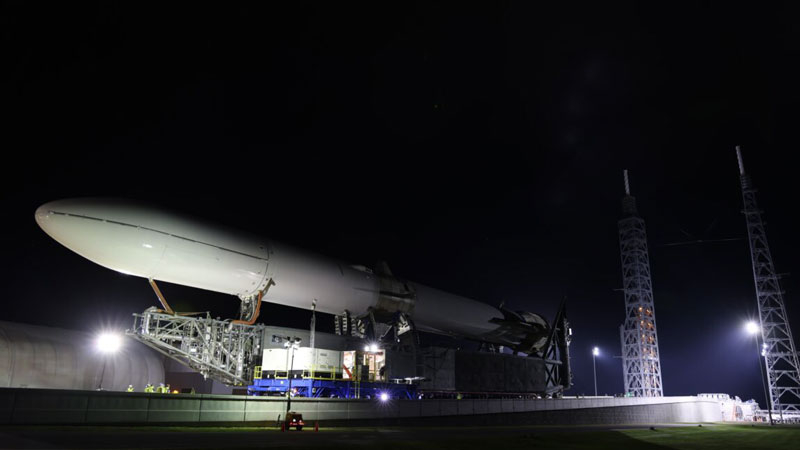
Blue Origin announced the return of New Glenn to flight six months after the accident, but doubts remain among most people
Blue Origin plans to bring New Glenn back to flight in six months
*Brief overview*
- New timeline: In a CNBC interview NASA head Jared Isaacman said the “probable” year for the rocket’s return is 2028.
- Blue Origin goal: The company wants to accelerate recovery and get New Glenn operational within six months—a timeframe many find too short.
What happened
DateEventMay 28 2026 (May 29 Moscow time) Accident during a static fire test of New Glenn. The rocket and part of the launch pad were destroyed, but the payload—50 internet satellites—was not loaded and remained intact.
Consequences: Destruction of the lightning‑rod tower, transport and installation equipment; serious damage to infrastructure.
What remains intact
- Cryogenic tanks (for oxidizer and fuel) – fully preserved.
- Water pressure tower – also survived.
- The damaged support tower can be repaired on site without full dismantling.
Recovery strategy
1. Transport module
- The company has long considered abandoning the current transport module (which moves the rocket from the assembly hangar into a vertical position).
- Instead, it plans to develop a new lifting device; work on it has already begun, speeding up return to flight.
2. Pad
- The pad will be restored with the New Glenn 7×2 configuration in mind (seven engines on the first stage and two on the second).
- These rockets have flown successfully, so abandoning them is impractical.
3. New version
- A heavier 9×4 configuration is under development; a separate pad is planned for it.
Why this matters
- Key asset: New Glenn is Blue Origin’s flagship heavy‑orbit launch vehicle.
- Commercial and lunar missions: The rocket launches Amazon satellites and serves as the platform for the Blue Moon lunar lander, which the company develops with NASA.
- Own module: The company does not want to launch its lunar module on competitors’ rockets (SpaceX).
Support and future
- Military tenants of the pad and NASA actively support Blue Origin’s push to return to flight as soon as possible.
- This may ease bureaucratic procedures, especially amid the incident investigation and subsequent decisions.
Conclusion: Blue Origin is confident that with the preserved critical pad components and active work on new lifting systems it can bring New Glenn back to launch within six months, despite serious damage from the accident.
 Asted Cloud
Comments (0)
Share your thoughts — please be polite and stay on topic.
Log in to comment