
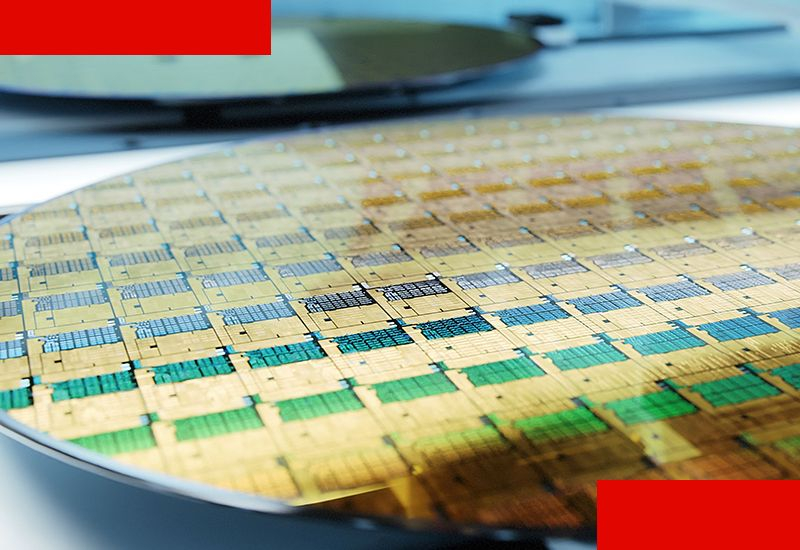
Sandisk joined the AI wave: revenue tripled, and profit nearly tripled as well.
How SanDisk is Tackling the Memory Chip Shortage
To mitigate the impact of an unstable NAND‑memory market, the company—one of the largest flash drive manufacturers—has adopted a strategy of long‑term contracts. In its latest quarterly report, SanDisk announced that it has already signed contracts totaling $42 billion.
Financial Results
Metric | Last Quarter | Year Ago
Revenue | $5.95 million (↑ 3.5×) | –
Profit | 78.4% (↑ 286%) | 22.5%
Operating Expenses | ↑ 16% | –
- Revenue rose almost three and a half times thanks to higher NAND prices and increased demand.
- Profit exceeded the LSEG forecast ($4.7 million) and reached 78.4%, reflecting strong margin performance.
- Last year, the company ended Q3 with operating losses of $1.88 million and net losses of $1.93 million; the current upside is a crucial step toward recovery.
Segment Dynamics
Segment | Revenue (Last Quarter) | YoY | QoQ
Servers | $5.95 million ↑ 7.5× | –
Peripheral Computing | $3.66 million (↑ 4×) | –
Consumer | $820 k (↑ 44%) ↓ 10% QoQ | –
- The server segment became the key growth driver, with revenue nearly tripling compared to the previous quarter.
- Peripheral computing delivered a four‑fold increase in earnings, becoming the main profit source.
- Consumer devices show modest growth but experienced a 10% decline during the current quarter.
Planned Figures and Strategy
- Expected revenue for the current quarter: $7.75–$8.25 million.
- Share buyback plan: $6 million.
Management emphasizes that only three long‑term contracts signed in the previous quarter (terms ranging from 1 to 5 years) generate a total revenue of $42 million. In the current period, the company has signed two additional large agreements.
Strategic Goal:
- Reduce the cyclicality of NAND‑memory prices.
- Create a more predictable and stable business model.
To achieve this, new contracts lock in fixed lower and upper price limits, and buyers are obligated not to back out without paying an appropriate sum to the supplier.
Thus, SanDisk uses long‑term agreements as a tool to hedge against market volatility and strengthen financial resilience.
 Asted Cloud
Comments (0)
Share your thoughts — please be polite and stay on topic.
Log in to comment