
Scientists have developed artificial neurons that the brain perceives as its own signals
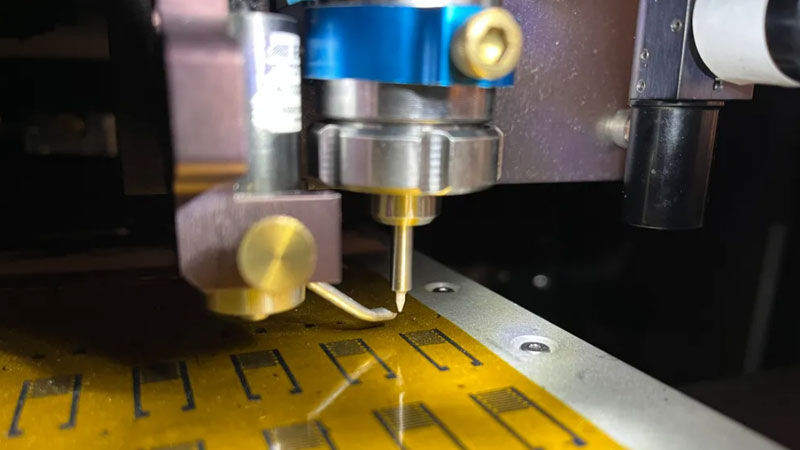
New artificial neurons “printed” by means of printing
*Engineers at Northwestern University have for the first time created printed devices that not only mimic the operation of nerve cells but also can directly interact with living brain tissue. This opens the way to creating more advanced human‑computer interfaces and neuromorphic computers.*
1. What was actually printed
- Ink – a mixture of molybdenum disulfide nanowhiskers and graphene.
- Substrate – a flexible polymer material onto which the pattern is deposited by inkjet printing.
- After the pattern is applied, the substrate is passed through an electric current. This partially degrades the binding polymer, leaving only thin conductive paths (filaments / threads).
2. How it works
- The resulting filaments conduct electrical current with the same shapes and temporal characteristics as biological neuronal signals – from single spikes to “burst” impulses.
- Thus, the printed elements can generate and control electric signals just like living nerve cells.
3. Experimental verification
- Artificial neurons were connected to mouse cerebellar slices.
- Living cells responded to the signals of the printed neurons as if they were their own: neuronal circuits were activated, confirming a match in shape and frequency of the signals.
4. Why this matters
What it opens up Interfaces “brain‑computer” More precise and biologically compatible interaction with brain activity Neural prostheses Restoration of hearing, vision, motor functions Energy efficiency II Neuromorphic computing can be 10 000 times more economical compared to classical computers
Conclusion
Printed neurons made from molybdenum disulfide nanowhiskers and graphene are capable of generating electrical signals identical to biological ones. This is the first step toward developing highly efficient brain‑computer interfaces, neural prostheses, and energy‑saving computing systems of the future.
 Asted Cloud
Comments (0)
Share your thoughts — please be polite and stay on topic.
Log in to comment