
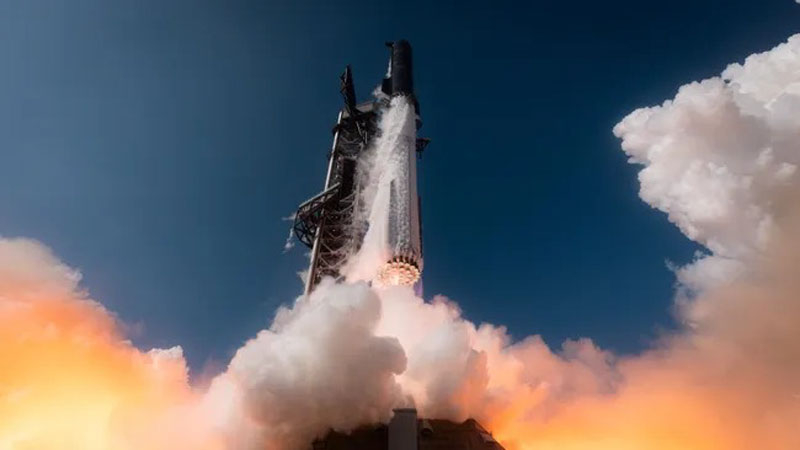
The first flight of Starship V3 confirmed the reliability of the upgraded megarocket, despite a subsequent explosion
Brief overview of the first launch of Starship V3
SpaceX successfully completed the first flight of the upgraded Starship V3 rocket system, which almost fully accomplished all planned objectives. The launch was particularly significant because within three weeks the company plans to go public and increase its share price.
What happened
Stage Event Key Details Preparation Flight was postponed three times due to ground equipment failures. The most serious failure occurred one day before launch – the hydraulic manipulator that secures the returning rocket on the tower stopped working. Launch The launch from the new Pad 2 in South Texas. The Super‑Heavy V3 booster activated all 33 new Raptor 3 engines; one of them shut down during ascent. Stage separation The stages separated without incident. However, the booster did not receive sufficient reverse thrust and missed the planned splashdown zone in the Gulf of Mexico. Since it had not yet been tested, losing the booster was inevitable. Upper stage flight Starship V3 continued its suborbital trajectory. One of six Raptor engines shut down during velocity buildup, but the rocket maintained its trajectory and successfully completed a payload demonstration (20 Starlink mock‑ups + 2 modified satellites with cameras). Orbital operations One of the planned orbital tasks was canceled. Engine failure led to abandoning a second engine launch into space, but other maneuvers (including flap deployment and safe reentry) were successful. Splashdown The vessel splashed down over the Indian Ocean. After touching water the ship tipped over and exploded, which was predictable.
Why it matters
* Testing new engines – the first flight with Raptor 3 demonstrated their operability in real conditions.
* System reliability – despite failures of the booster and upper stage engines, the complex completed all critical tasks.
* Path to lunar and Martian missions – Starship V3 can deliver up to 100 t of payload into low Earth orbit. It is equipped for orbital refueling, opening a path to the Moon and Mars.
* Near‑term plans – the first flight of a lunar lander is expected in a year and a half; docking tests with Orion are planned soon.
Conclusion
Starship V3 demonstrated that the upgraded system is ready for mass deployment and could become a key element of future crewed missions to the Moon and Mars. The successful launch strengthened SpaceX’s position in the rocket technology market and will positively affect the company’s shares ahead of its public debut.
 Asted Cloud
Comments (0)
Share your thoughts — please be polite and stay on topic.
Log in to comment