
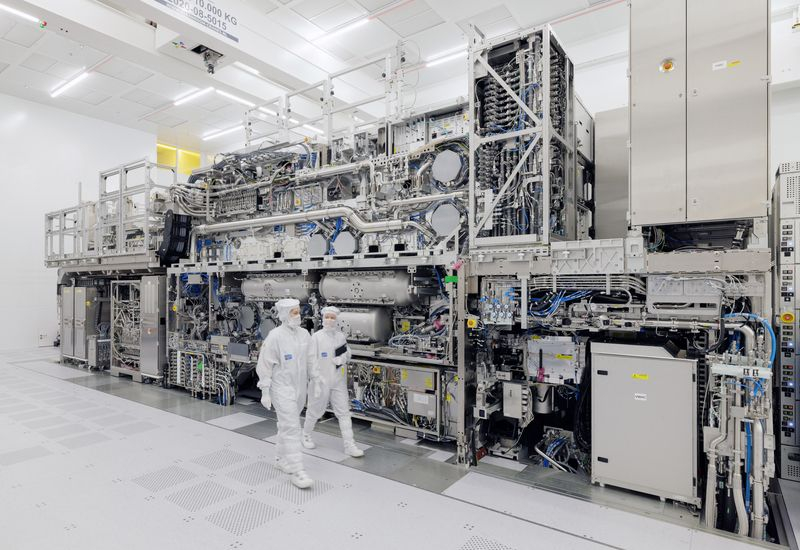
TSMC will follow Intel’s path: it has already acquired high‑NA EUV lithography machines, but mass production of chips with them is not yet planned
TSMC – skeptic about High‑NA EUV but experimenting
Intel Corporation actively advertised its purchase of high‑aperture (High‑NA) EUV scanners from ASML, yet the Taiwanese giant TSMC remains cautious about their mass deployment. Nevertheless, the company is conducting trials with this equipment.
At the annual shareholders’ meeting, TSMC board chairman C.C. Wei expressed his thoughts on the situation. Even memory market leaders such as Samsung and SK Hynix have already begun ordering High‑NA scanners from ASML, but TSMC still does not see a need for widespread use of them.
> “We have several High‑NA EUV systems, but they are solely for research purposes. In the foreseeable future we do not plan to introduce them into mass production,” said Wei.
> “As soon as costs drop and we can fully reap the benefits, we will implement the equipment,” he added.
One such system costs almost $400 million.
Future plans without High‑NA
TSMC intends to master advanced process nodes by 2029 without using High‑NA EUV. According to published data, by then the company plans to deploy A13 and A12 technologies, which will bring lithographic limits close to 1 nm. For mass production of chips on these processes, High‑NA equipment will not be required.
Intel, in contrast, may start using High‑NA already within its 14A process (if it is mastered in 2027). In 18A the company conducted laboratory experiments with this equipment but did not move to mass production. According to Wei, competition from Intel and Samsung poses no threat to TSMC at present.
Demographic factor
At the same meeting, the company’s head touched on Taiwan’s demographic situation. He noted that with current birth rates, TSMC will face a shortage of engineers and technical specialists in the future. Within the company, the birth rate is five times higher than the island average, but the talent deficit will still grow over time.
Si‑Ci Wei did not predict a slowdown in chip demand growth, even if capital expenditures this year reach about $56 million and rise to a peak. He believes the chip market will continue to grow and the company will be ready for it.
 Asted Cloud
Comments (0)
Share your thoughts — please be polite and stay on topic.
Log in to comment