
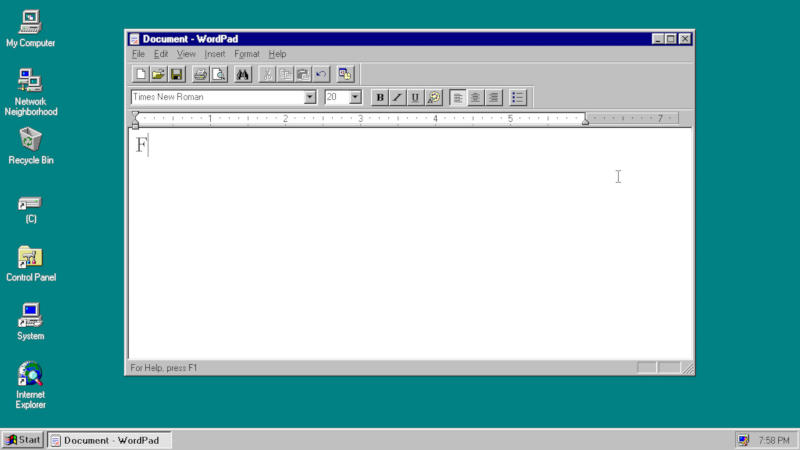
Windows 11 is still based on the code of Windows 95, and efforts to replace it have proven unsuccessful
The key “brain” element of Windows 11 is Win32
The most reliable and time‑tested API that remains the core of Windows 11 functionality is Win32. Its roots go back to the Windows 95 era, when developers dreamed of flying cars and lunar stations by 2026.
Mark Russinovich explains the origin
In an interview, Microsoft veteran Mark Russinovich noted:
> “Who in the nineties expected Win32 to be a relevant API in 2026? No one. We were dreaming of flying cars and lunar stations, not Win32 that was created back in Windows 95.”
Thus, Win32 is a set of functions and calls that third‑party software uses to interact with the OS. If a program needs to display a window, read a file, handle a mouse click or respond to a keyboard key, the developer simply calls ready‑made functions: `CreateWindow()`, `ReadFile()`, `GetCursorPos()` etc., rather than writing their own code.
Attempts by Microsoft to abandon Win32
With the release of Windows 8, the company introduced a new API – WinRT – which was supposed to become the foundation of the user interface. It was expected that “square boxes” would stay for a long time. However, Windows 8 did not achieve the anticipated success, and in Windows 10 Microsoft returned to Win32.
WinRT gradually absorbed Universal Windows Platform (UWP), which later became Windows App SDK and WinUI 3. Nevertheless, most applications still rely on Win32 to perform their tasks.
 Asted Cloud
Comments (0)
Share your thoughts — please be polite and stay on topic.
Log in to comment